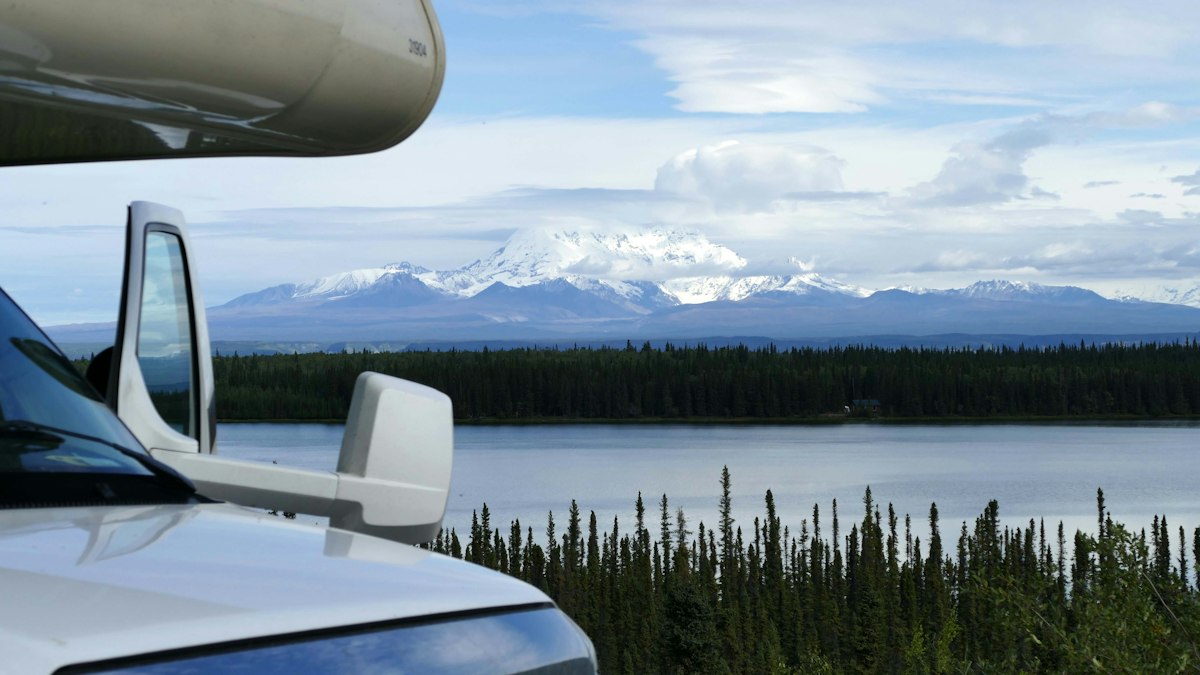
Rubber Tramping the Dakotas: Free and Low-Cost Long-Term RV Camping
Rubber tramping — living full-time in a vehicle or RV and stretching every dollar of your camping budget — is alive and well in the Dakotas. The region does not have the BLM land abundance of the Southwest, but it has something most rubber trampers overlook: an enormous network of U.S. Army Corps of Engineers campgrounds, National Grasslands dispersed sites, and state recreation areas priced at $5–$18 per night. For a self-contained rig on a tight budget, the Dakotas in summer are genuinely viable and dramatically underused compared to the Arizona and Utah circuits. Here is the actual map of what exists and how to use it.
Corps of Engineers Campgrounds: The Backbone of Budget Camping in the Dakotas
The U.S. Army Corps of Engineers manages more than 400 campgrounds nationally, and the Missouri River system in the Dakotas hosts a substantial portion of the Midwest inventory. Lake Sakakawea in North Dakota is a COE project with multiple campgrounds ranging from free primitive sites to developed sites with electric hookups at $18–$26 per night. The 14-day stay limit applies at most COE facilities during peak season (Memorial Day through Labor Day), but the number and variety of sites along Lake Sakakawea's 1,500-mile shoreline means you can move between sites and stay in the area for weeks.
South Dakota COE campgrounds anchor around the Missouri River reservoir chain — Lake Oahe, Lake Francis Case, Lewis and Clark Lake, and Gavins Point. The campgrounds vary from fully developed (electric hookups, flush toilets, dump stations) to primitive (a fire ring and a parking spot). The primitive sites are often free or $5 per night. For a rubber tramper with a dry-camping capable rig — solar panels, a water tank, and composting or black tank capacity — the primitive COE sites represent some of the most scenic free camping in the Midwest.
National Grasslands: Dispersed Camping on Federal Land
The Dakotas have two substantial National Grassland systems that allow dispersed camping — meaning you can camp outside of designated campgrounds on the open land, typically for free, with a 14-day limit before you must move at least 25 miles.
Little Missouri National Grassland in western North Dakota is the largest national grassland in the country by acreage and sits adjacent to Theodore Roosevelt National Park. Dispersed camping is permitted on most of the grassland outside of designated campgrounds and restricted management areas. This is genuine boondocking: no hookups, no facilities, no reservations, no fee. The landscape is badlands prairie — dramatic, remote, and quiet. Cell service is limited to spotty Verizon and AT&T coverage along the main roads. Starlink RV handles the coverage gap effectively.
Buffalo Gap National Grassland spreads across southwestern South Dakota near the Badlands and Wind Cave area. Dispersed camping is permitted in most areas outside of campground boundaries. The proximity to Badlands National Park and the Black Hills makes this a useful free camping base for visiting the marquee attractions without paying $60–$80 per night for a private campground site in the peak corridor.
The rules for National Grasslands dispersed camping: stay no more than 14 consecutive days in any one location, move at least 25 miles before returning to the same area, pack out everything you pack in, and check with the local Ranger District for any seasonal closures (hunting season restrictions and fire restrictions during drought years apply).
State Recreation Areas Under $20 a Night
South Dakota State Parks and Recreation Areas operate on a fee structure that is among the most affordable in the region. Non-electric sites at most state recreation areas run $12–$16 per night. Electric hookup sites run $18–$24. For a rubber tramper who can dry camp but wants occasional hookup access for battery charging and tank flushing, the South Dakota state system is a reliable network of low-cost options spread across both halves of the state.
The South Dakota State Park annual pass runs $30 and eliminates the per-vehicle entry fee at all state parks. If you are planning a summer in South Dakota, this is the first purchase to make. It pays for itself in two or three visits to any park that charges entry fees.
North Dakota State Parks run on a similar structure. The annual park pass is $30 for North Dakota residents and $40 for non-residents. Non-electric camping runs $10–$15 per night. Electric hookup sites run $18–$22. The North Dakota park system is smaller than South Dakota's but covers the key regions: the Badlands corridor, Lake Sakakawea, Devils Lake, and the Missouri River breaks.
How to Stretch 14-Day Limits Without Leaving the Region
The 14-day rule at COE campgrounds and National Grasslands is the main constraint for rubber trampers planning an extended stay in the Dakotas. The practical workaround is rotation: map out a circuit of two to four sites in a region and rotate between them on a two-week cycle. You are required to move at least 25 miles (for grasslands dispersed) or simply leave the specific site (for COE), not leave the state.
A Lake Sakakawea rotation, for example, can include four or five COE campgrounds spaced along the 1,500-mile shoreline, each with primitive or low-cost sites. You move every two weeks and spend the summer on the same lake, fishing the same walleye and pike habitat, without ever leaving the reservoir system. This is a known strategy in the rubber tramper community — the Dakotas are underused partly because the Southwest gets all the attention, and partly because the rubber tramper forums have not caught up to how much COE land is available here.
What Self-Contained Means in Practice
Free and low-cost camping in the Dakotas requires a rig that can operate without hookups for at least several days between fills and dumps. Here is the minimum viable setup:
- Water: At least 40 gallons of fresh water capacity. Many rubber trampers carry an additional portable tank. Water fill stations exist at most state park campgrounds and at dump stations throughout the region.
- Power: 200–400 watts of solar with a 100–200 amp-hour lithium battery bank handles basic loads — phone charging, laptop, LED lights, fan, small appliances. Running a rooftop AC unit off solar requires a significantly larger system (600W+ solar, 300+ Ah lithium). Most rubber trampers use the summer heat as justification for moving to shadier, higher-elevation sites rather than running AC off solar.
- Waste: A 30–40 gallon black tank lasts two people 5–7 days with conservative use. Dump stations at COE campgrounds are typically free with a camping fee or nominal ($5) for non-campers. State park dump stations are included with the annual pass.
- Cell/connectivity: Starlink RV is the single most effective upgrade for rubber tramping in rural Dakotas. At $150/month, it is not cheap, but it is the difference between workable and frustrating in the cell-limited areas west of the Missouri River in both states.
The Rubber Tramper's Monthly Budget in the Dakotas
Based on a summer rotation using free and low-cost sites:
- Camping fees: $0–$300 per month (mix of free dispersed and $18/night COE sites)
- Fuel: $150–$300 per month (moving every two weeks, moderate mileage between sites)
- Food and supplies: $300–$500 per month (cooking in the rig, occasional town resupply)
- Cell/Starlink: $150–$200 per month
- Propane: $40–$80 per month (summer, primarily for cooking)
All-in, a frugal rubber tramper in the Dakotas in summer can sustain a real lifestyle for $800–$1,200 per month. This is below the poverty threshold for much of the country and above the quality-of-life floor by a significant margin — the Dakotas are genuinely beautiful, the fishing is exceptional, and the crowds are a fraction of what you find in the Southwest boondocking circuits from October through April.
DakotaRVParks lists private campgrounds across North and South Dakota with hookup types, pet policies, and contact information for when you need a hookup night to recharge your batteries — literally and figuratively. Use the search filter to find low-cost parks near the COE and grasslands areas when you need a night with power before heading back out.